Volvic to Saint Germain Les Belles

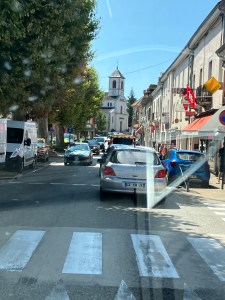
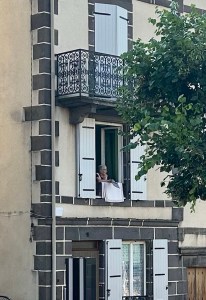
An early morning walk into historic Volvic. stopped at a cafe for pastries and coffee with the locals. It was too early for any tourist, so felt authentically French! Particularly as we were watched by the old French lady from her window overlooking the town square!
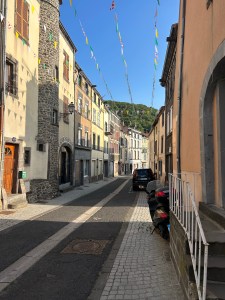
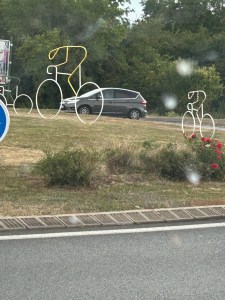
The town was getting ready for the Women’s Tour de France to peddle through tomorrow. Seems that everywhere we go we come across the Tour. So many villages decked out with bunting, bikes, shirts and chalk messages in the road!
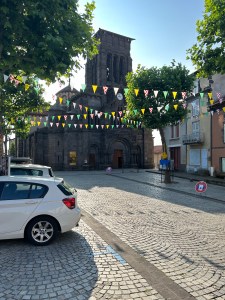
Quick stop detour through Riom. A scenic town in the Volvic area, followed by a stop at the source of Volvic water.
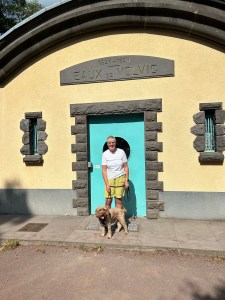
Lunch in the countryside just outside Gentioux-Pigerolles was a chance to take a break from the uphill-downhill, winding journey. We found a spot by a babbling stream and set up for a rest and some food. The general area is taken over with lakes, forestry and farming, and comprises three villages and several hamlets situated in the upper valleys of both the Maulde and Thaurion rivers, some 15 miles (24 km) southwest of Aubusson
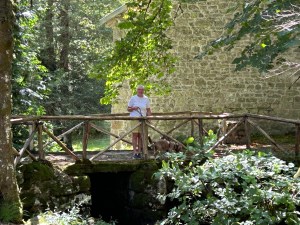
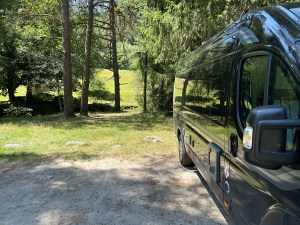
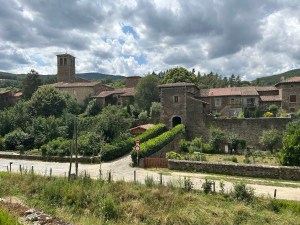
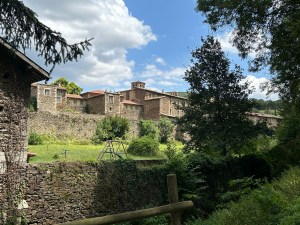
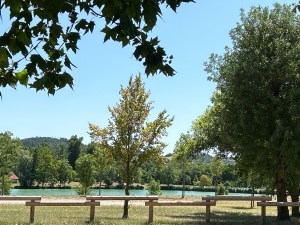
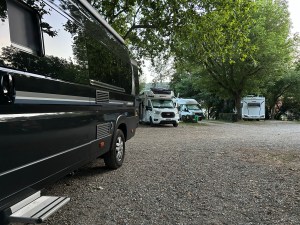
We camped at Camping de Montréal just outside Saint-Germain-les-Belles in the Parc naturel régional Périgord Limousin. A lovely site on the edge of a lake used mainly for water sports and swimming in particular.
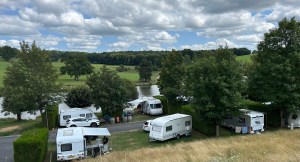
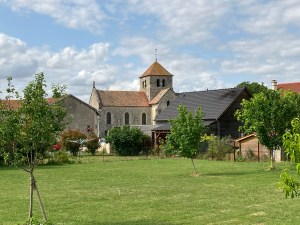
Before being called Saint Germain Les Belles, this municipality was called Saint Germain Les Belles Filles (Saint Germain The Beautiful Girls). Local history suggests that when this village was still only called Saint Germain, King Henry IV passed there to participate in the baptism of a little boy of whom he was to be the godfather and so he stopped for a few days at the inn of the village “La boule d’or” (which still exists but is no longer active) and he enjoyed life so much that he, who was king and who, therefore, had the powers to change the names of the cities and villages of his kingdom, left by proclaiming that this village would henceforth be called Saint Germain les belles filles. The village has never officially carried this name; but it has remained engraved in the memories of the oldest, who have repeated it from generation to generation and

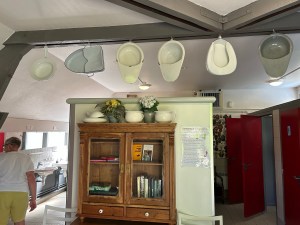
Got to love a quirky French toilet!
Volvic Via Sainte Croix En Jarez La Chartreuse

After a night on a dusty and very hot Aire, we set off towards St Etienne. We travelled on the busiest roads we have encountered on this trip, as we ventured towards this big and busy city.

Saint-Étienne is the thirteenth most populated commune in France and the second most populated commune in Auvergne-Rhône-Alpes. Its metropolis (métropole) is the third most populous regional metropolis after Grenoble-Alpes and Lyon. The commune is also at the heart of a vast metropolitan area with around 1/2 million inhabitants.

Long known as the French city of the “weapon, cycle and ribbon” and a major coal mining centre, Saint-Étienne is currently engaged in a vast urban renewal program aimed at leading the transition from the industrial city inherited from the 19th century to the “design capital” of the 21st century. The city is currently undergoing renewal, with the installation of the Châteaucreux business district, the steel shopping centre and the creative manufacturing district.

The city is known for its football club AS Saint-Étienne, which has won the Ligue 1 title a joint-record ten times

We left this sprawling city and headed to Sainte Croix En Jarez La Chartreuse. An unusual place, and unique in that a Chartreuse (Charthusion Monastery) has become a village!

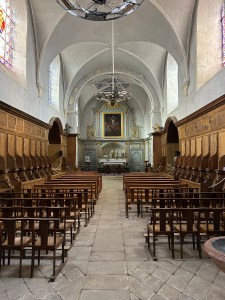
Marked by 500 years of monastic presence whose key words were “Prayer, Solitude and Silence”, the Site opened by the will of the people and as a result of the Revolution. New inhabitants have invaded the place, transforming this retreat, reserved for a privileged few, into a living village open to the world.

The presence of the old monastery in the very heart of the village, gives it a unique charm and character. It is a protected village and considered one of the Most Beautiful Villages in France.

It was worth travelling up the winding roads to see this impressive place. Lunch in the grounds and then time to move on.

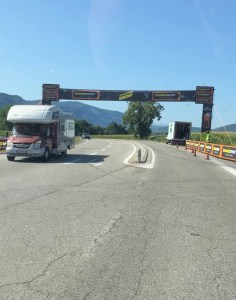
Passing more signs of the Tour de France we headed along the toll roads to Volvic; the area of volcanoes and lakes!

Volvic is located in the heart of a landscape shaped by volcanic eruptions and is now internationally renowned for the purity of its water. But the city was first known for its grey and resistant stone, exploited as early as the 12th century. The village has a lot of heritage: narrow streets lined with stone buildings, fountains, feudal castle, Romanesque church, and museums. The municipality, which extends over nearly 30km², includes 17 villages. Volvic is also one of the gateways to the Auvergne Volcanoes Regional Natural Park and has a regional nature reserve and a protected nature area.

Along The Rhône

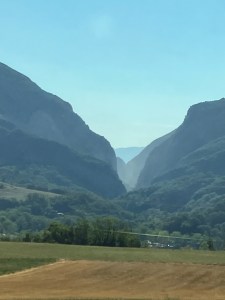
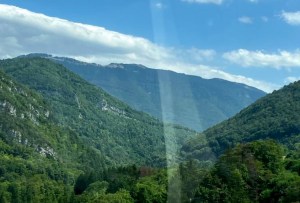
Took a scenic drive through the Alps following the Rhône, heading toward Valance. Some spectacular views and some tight winding mountain passes.

We re-fuelled the Brindley Boxer at Culoz after missing the turning and venturing into the village! Prices are pretty much the same as in England and after the work the van has done, up and down the mountains in 30 degree heat, she certainly had a thirst!

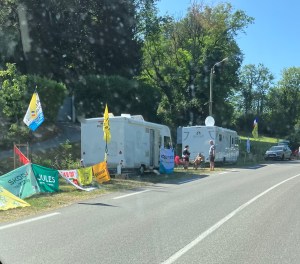
A quick stop at a hyper market for some Allen Keys at Belley. One of the folding chairs needed a minor repair! We then found ourselves right on the Tour de France route! Campervans and fans lined the roads and we passed under the distance markers. There was blue and yellow everywhere and a lot of folk waiting with eager anticipation for the tour to pedal through later.

Feeling hungry, it was a late breakfast at the side of the Rhône, just on the edge of Murs-et-Gélignieux. A lovely little restaurant but lacking in pastries! So it was chocolate waffles and strong coffee, to fuel us until lunch.

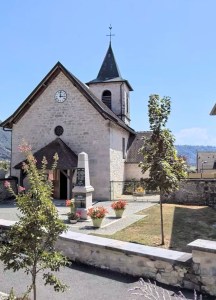
We then continued through the villages, mostly along the edge of the Rhône, passing quintessential French rural houses and plenty of pretty churches.

Lac de Champos for lunch. By a lake popular with water sports and swimmers.

We finally settled at a nice Aire in La Roche-de-Glun, a commune in the Drôme department of southeastern France. It lies on the left bank of the Rhône, opposite the village of Glun. The Aire sits on an island in the middle of the river and the site is next to a swimming pool. We were, in every sense, surrounded by water!

An evening walk through the apricot groves completed an excellent day. Sharon went scrumping (although not sure you go scrumping for apricots – so let’s say stealing). She did say that they were lovely and very sweet.

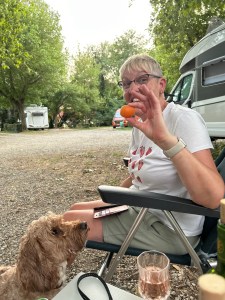
The thief and her accomplice!

Seyssel

First an update. Billy seems much better today, had his appetite back and was almost back to his old self. So, we decided to leave Dijon and head to the Alps.

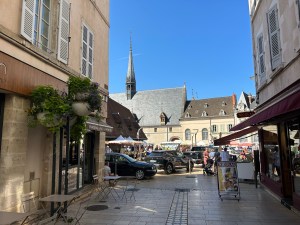
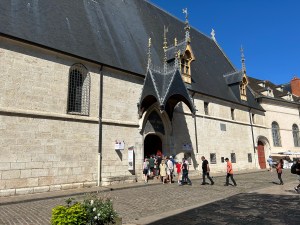
We headed off to Buene because it had been recommended. What a wonderful place. It’s a walled town at the center of the Burgundy winemaking region in France. Surrounded by the Côte d’Or vineyards, the cobbled town is renowned for an annual wine auction held at the Hôtel-Dieu (Hospices de Beaune). Recognized by its colorful, geometric-patterned tile roof, this 15th-century former hospital is now the Hôtel-Dieu Museum.

Beune is considered the capital of Burgundy wines. Every corner has a shop or wine caves selling expensive wines to every visitor.

In addition to the wine, Beaune is most famous for its hospital. Nicolas Rolin, Chancellor to Phillipe Le Bon, Duke of Burgundy and his wife, Guigone de Salins, founded Hospices de Beaune (or Hôtel-Dieu) in 1443. The Hundred Years’ War was ending and Burgundy was reeling from plague. This hospital served everyone in the region, regardless of their financial means, from 1452 through the 1960s. The Gothic-style building was inspired by the architecture in Flanders, and its colorful glazed tile roof is typical of Burgundy. This type of roof was a status symbol, dating to the 13th century when they adorned cathedrals. In the 14th century, they were en vogue with aristocrats.

From Beaune we ventured into the Alps. Deciding to go the quickest route did mean a 33 euro toll but it saved an hour or more in travel time (better for Billy we felt).

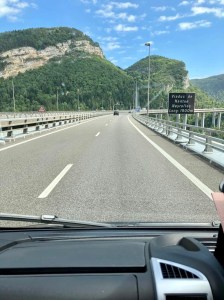
How impressive our introduction to this region. Long tunnels and soaring bridges/flyovers cut through the mountainside. The view up the mountains and down into the valleys far below was quite breath taking.

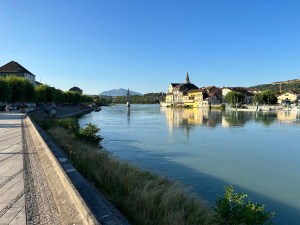
We stopped at an Aire in Seyssel an ancient town on the Rhône’s banks laying between the Bugey’s Grand Colombier Mountain and the Montagne du Prince in Savoie. There is little here but leisure activities centre in the water.

At 800 km long, the Rhône is one of the largest rivers in Europe. It has its source in the Swiss mountains. After crossing Valais, the river flows into Lake Geneva, then resumes its course to enter French territory. It finally flows into the Mediterranean.

The history of this territory of the “Haut-Rhône” is therefore quite naturally linked to this river. Especially with a river trade that represented a very important economic activity until the 19th century.

We had dinner in the town amongst the locals. A lovely village straddling the Rhône with the Grand Colombier in the distance. The Colombier is a mountain in the Ain department in eastern France. The summit dominates the upper valley of the Rhône and the Lake of Bourget in the Savoie department and the commune of Culoz which lies at its feet.

Visit To The Vets

Unfortunately we find ourselves spending another night in Dijon. Pleasant tho’ it is, it wasn’t the plan!

Billy has taken a slight turn for the worse. Still has a dodgy tummy and today has lost his appetite and is very lethargic. So, we decided on a visit to the vets and to stay another day.

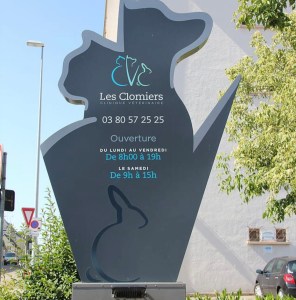
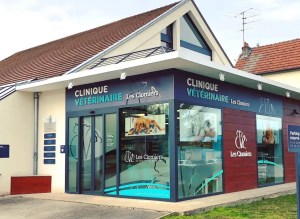
The vets were brilliant. Clinique Vétérinaire Des Clomiers helped enormously. Benedict, the vet, was so so helpful and when her English, which was very good, let her down, she went online to translate. This made sure that we absolutely understood her diagnosis and course of remedy. Just can’t thank her enough.

With a big bright clinic with very helpful reception staff, this vets couldn’t be recommended highly enough.

So we now wait to see if Billy is fit and well in the morning before we make plans for tomorrow.

Dijon – Day 2

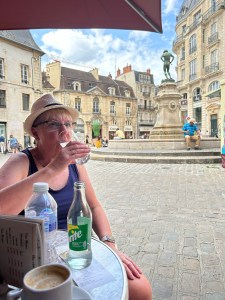
Billy has perked up, so we took a reasonably short walk along the river Ouche into the city of Dijon. Rich in architecture and with many shops, we spent time visiting the sites, with the odd stop for coffee! Bizarrely we didn’t buy any mustard!

Known as the “City of Dukes,” Dijon was the capital of the medieval duchy of Burgundy. The center of town boasts a UNESCO World Heritage designation, because of its well-preserved aristocratic palaces and elegant ‘hôtels particuliers’, former residences of Dukes of Burgundy and other distinguished owners.

The Owl is the symbol of Dijon and there is an Owl Trail around the city. We managed, by chance, to follow this trail but going in reverse!

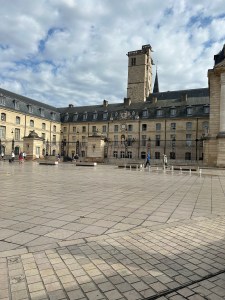
We visited many of the city’s sights including the Palais des Ducs et des États de Bourgogne, or the Palace of the Dukes of Burgundy. This was the residence of the Dukes of Burgundy in the 15th and 16th centuries. Renovations in the 17th century transformed the building into a refined Neoclassical palace that echoes the design of the Château de Versailles (designed by the same architect, Jules Hardouin-Mansart).

Today, the Palais des Ducs et des États de Bourgogne is used as the Hôtel de Ville (Town Hall).

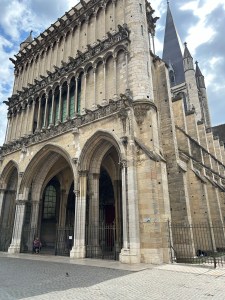
Next was the 13th-century church of Notre Dame, a striking example of Gothic architecture, with a one-of-a-kind façade that features dozens of grotesques figures, some quite predictable, others downright strange. On the outside corner on Rue de la Chouette is the famous little stone carving of the owl and is said to bring good luck to those who touch it with their left hand.

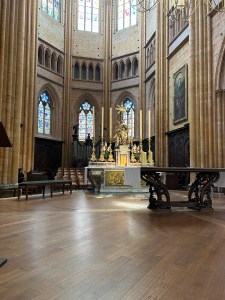
Keeping up the church theme, also visited the Cathédrale Saint-Bénigne. This is considered to be the city’s finest example of Burgundian Gothic architecture. Built between 1280 and 1314, the cathedral was originally a Benedictine abbey church. The cathedral is dedicated to Saint Benignus, who was martyred in Dijon in the late 2nd century.

The only remaining participants of the original abbey is the “Rotonde,” a three-story subterranean crypt, which contains the relics of Saint Benignus. This solemn domed space dates to the 10th century (Carolingian era) and resembles the interior of the Church of the Holy Sepulchre in Jerusalem. Unfortunately it is currently being renovated and we couldn’t visit!

So a cultural visit, interspersed with a bit of window shopping and research into buying a French SIM card. We ended up buying a SIM at a tabac and can now get the WI-FI in the Brindley Boxer, running at speed, on the French phone network!!

Dijon – Day 1

Took a short and uneventful drive down to Dijon. Late start mainly because Billy has a bit of an upset stomach. Spent most of the night getting up and taking him to the toilet!
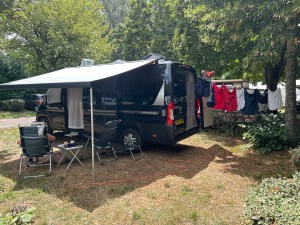
He seems better today but grumpy because we are now keeping him away from French food and also put him on bottled water. Fingers crossed this does the trick.

Sharon’s highlight of the day was getting some washing done and another trip to an enormous supermarket. So happy that she could self checkout, but frustrated that she didn’t press for the English option in the screen!

Now pitched for two nights at Camping Lac Kir. A lovely site right in the heart of Dijon city centre. Time for a relaxing couple of nights and a chance to catch up on some housekeeping!

Sharon says; “we look proper French with the washing hanging out the back!”

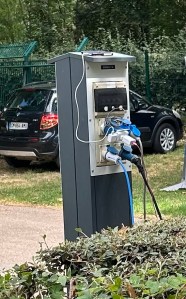
To make the point when we ‘hooked up’ we came across a multipoint charger putting juice in two mobile phones!!

The campsite is in the heart of the city, a pleasant site in a natural setting near Lake Kir and we took an evening walk along the river Ouche round to the lake. It was busy with locals out and about enjoying the evening sunshine.

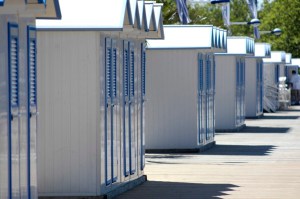
Part of the 37 hectares of the lake is cordoned off to allow you to swim safely. The shores of Lake Kir have been transformed into a small seaside resort with the installation of one hundred and fifty meters of floor, thirty beach cabins and about twenty palm trees. The fine sand spread along the lake completes the seaside look!

Slow Drive To Langres

Took a scenic drive through the champagne region, taking in the vineyards and multitude of champagne producers on route. First town we visited was Bar Sur Aube and a stop for fuel. The town gets its name from the river Aube that runs through it.

Fuelled up we moved on to Chaumont. A large town and driving through some of the high rises flats showed us the other side of the town!

Historically, Chaumont was the seat of the Counts of Bassigny and later of Champagne, receiving a charter in 1190. It was the venue of an offensive treaty against Napoleon I signed by the United Kingdom, Austria, Prussia, and Russia in 1814, by which they agreed to continue war until France returned to its 1792 boundaries.

Chaumont was bombed in 1940 and 1944 during World War II. From 1951 to 1967, the United States Air Force under NATO operated the Chaumont-Semoutiers Air Base on the outskirts of the city.

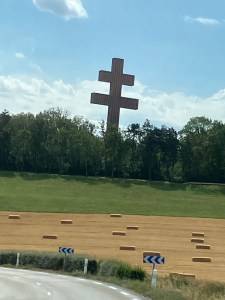
On route we passed one of the many monuments to Charles de Gaulle. This one marks the area that General de Gaulle acquired a residence in 1934, the property of La Boisserie, where he died in 1970.

The current memorial was inaugurated in 2008, replacing a first building inaugurated in 1972, which until then housed a small exhibition and provided access to the monumental Cross of Lorraine, completed the same year.

Next we hit Langres. An impressive town sat up on the hill. Langres is a commune and subprefecture of the department of Haute-Marne, in the region of Grand Est. It has an historic town center surrounded by defensive walls with a dozen towers and seven gates. The most notable attraction is the cathedral of Saint-Mammès, a late 12th-century church dedicated to Mammes of Caesarea, a 3rd-century martyr.

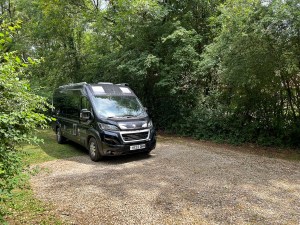
Finally, we arrived at Camping de La Croix d’Arles, our stop of the night. A lovely family friendly site in the scenic Haute-Marne.

Troyes & Meurville

Why just visit the vineyards of the Champagne region when you can stay in one! Stopover at Meurville at a small site owned by the Champagne producer Perron-Beauvineau. But before the champagne, a visit to the very picturesque city of Troyes.

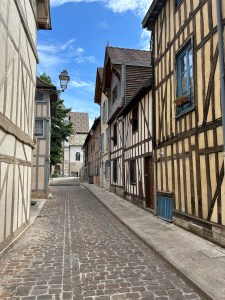
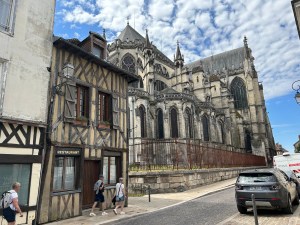
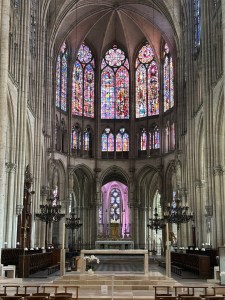
“Troyes, the Magnificent” according to the tourist information. And it didn’t disappoint. We visited the Saint-Jean district with its remarkable half-timbered houses from the 16th century, the picturesque courtyard of the Mortier d’Or and the treasures of the Sainte-Madeleine church (12th-16th centuries).

Troyes had a population of 61,996 inhabitants in 2018. It is the center of the agglomeration community Troyes Champagne Métropole, which was home to 170,145 inhabitants.

Troyes developed as early as the Roman era, when it was known as Augustobona Tricassium. It stood at the hub of numerous highways, primarily the Via Agrippa. The city has a rich historical past, from the Tricasses tribe to the liberation of the city on 25 August 1944 during the Second World War, including the Battle of the Catalaunian Plains, the Council of Troyes, the marriage of Henry V and Catherine of France, and the Champagne fairs to which merchants came from all over Christendom.

The city has a rich architectural and urban heritage: many buildings are protected as historical monuments, including the half-timbered houses (mainly of the 16th century) that survived in the old town. They have contributed to Troyes being designated as a City of Art and History.

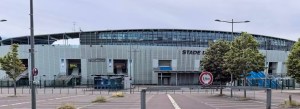
One the way back we passed the Stade de l’Aube, the main football stadium in the city. Home of the Troyes’ professional football club, ES Troyes AC.

Espérance Sportive Troyes Aube Champagne, commonly known as Troyes, is a French football club, who play in Ligue 2, the second level of France’s football league system

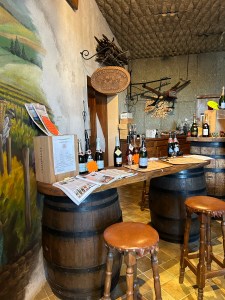
And so to our evening. Champagne tasting courtesy of Perron-Beauvineau. An excellent, information packed visit to the distillery and, of course, the obligatory tasting.

It was a joy to meet the family and so nice to cool off in their wine cave! Couldn’t resist buying a few bottles from this family run maker, right in the heart of the champagne region. A perfect end to a day full of history and discovery.

Reims Or Bust!
Well after the joys of Arras, the day started with good intentions as we headed for Reims. After a dog walk along the canal, we set off to stock up at a hyper market.

Mr Google sent us into the centre of Reims and nowhere near our destination. After a 15 minute detour we found the out-of-town store and Sharon did battle with the natives stocking us up for a few days.

We headed off to our planned destination on the edge of the city. It was full! So we found something further out and took our second detour of the day.
Well bad luck never travels alone ! We arrived at an Aire populated with French gypsies. It wasn’t pleasant and we drove round the site and straight out! It felt like we were being sized up as a looting opportunity!

We had to drive away from Reims to find a lovely little campsite in Val-de-Vesle. They made us welcome before we settled in and had a walk round the most picturesque little French village.

So returning to the title of this blog. It was definitely bust. However, we learned a lot about touring in France today and one slightly disappointing day out of three, isn’t bad going. More adventures ahead……

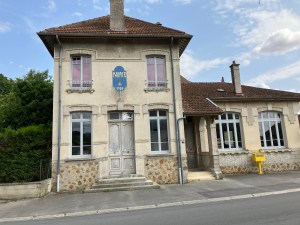
Val-de-Vesle is a small commune in the Marnedepartment in the Grand Est region in north-eastern France. It was created in 1965 with the merger of the former communes of Courmelois, Thuisy and Wez. The town hall, pictured above, and the church, are the two most striking buildings in this commune.

Design a site like this with WordPress.com
Get started