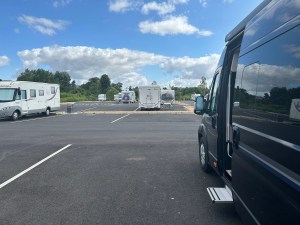
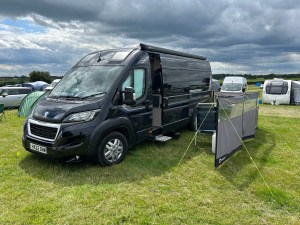
We drove the short distance to Arras and pulled into our first Aire. Having never used one before we didn’t know what to expect!
What a surprise awaited us. A motorhome parking site in the town itself. New tarmac, toilets, showers, fresh water, waste disposal, and free Wi-Fi all available. For a first Aire stop, we’re not sure whether this might be the norm, or whether we had a severe case of beginners luck.
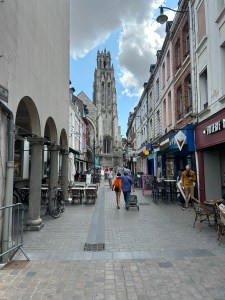
Arras didn’t disappoint either. It attracts thousands of visitors every year, who explore the city’s architecture and historic buildings.
Market day in the square bought out all the best in French produce. The strong smelling cheeses and large meat stalls were impressive to say the least.
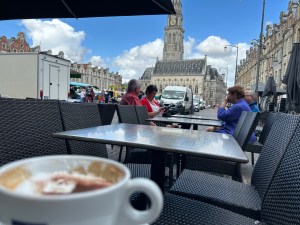
After a walk around the sights Sharon had her first coffee in La Place Des Héros and later, a nice three course lunch.
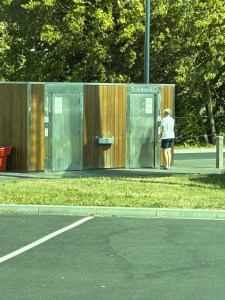
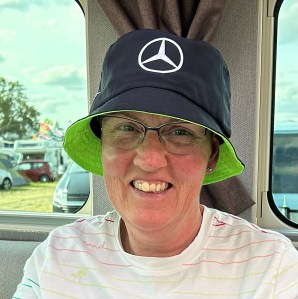
Sharon got excited trying to get into toilets and showers. No one could find the code to open the doors until Sharon worked it out and then ran round all the other campers telling them how to get in. Never been so hyped over something we don’t need!
Some of the attractions in Arras include the Town Hall and its Belfry (listed as a UNESCOWorld Heritage Site since 15 July 2005), the “Boves” (a maze 10 m or 33 ft beneath the city), the Squares (La Place des Héros and La Grand’Place), the Art District (the Theatre of Arras and the Hôtel de Guînes), the Abbey District (The Saint-Vaast Abbey and the Cathedral of Arras), the Vauban Citadel, and the Nemetacum site (the ancient town founded by the Romans 2000 years ago). The Canadian National Vimy Memorial is just outside the town.
Time for trivia – The rat is the likeable symbol of the city of Arras. The townspeople’s affection for this little rodent is rooted in history, and today it is expressed in multiple forms. First of all, in chocolate! An essential local product and a speciality to nibble as you take in the sights.
In former times, the “s” in Arras was not pronounced. So “Arra” became “A Rats” (“with rats”, in English) in popular imagery and language, as they both sounded the same in French. Rats first appeared on official city seals in the fourteenth century, surrounding a lion and a fortified enclosure. From 1331, they also appeared among the symbols of the Bishopric of Arras. Adopted by the coin mint of Philip II of Spain in the sixteenth century, the image of the rat was disseminated widely and thus it became the curious and rather mischievous emblem of the city.




 The Brindley Boxer